Bernese Mountain Dog Health Issues: The Complete Guide For Parents
If you share your life with a Bernese Mountain Dog, you already know there is something different about this breed. They lean into you like you are the most important thing in the world. They want to be in every room you are in. And if you have spent any time in the BMD community, you have probably heard the phrase: “You are with a Berner for a good time, not a long time.”
That phrase is not said to be cruel. It is said with love, and with hard-won honesty. Bernese Mountain Dogs live an average of 7 to 10 years – shorter than most large breeds. Some do not make it past 5. And the reason, more often than not, is cancer – a disease that strikes this breed at a rate unlike almost any other.
But here is what that phrase leaves out: owners who go in prepared do better. The ones who chose breeders who test their dogs, got pet insurance before the first diagnosis, learned the warning signs, and built a relationship with a good vet – those owners and their Berners had the best outcomes.
This guide covers every significant health condition in the Bernese Mountain Dog, the genetic reasons behind them, what to watch for, what preventive care actually looks like, and what real costs to expect in the United States. Whether you are a new owner, a prospective buyer, or someone whose Berner is getting older, this is the complete picture.
How Long Do Bernese Mountain Dogs Live?
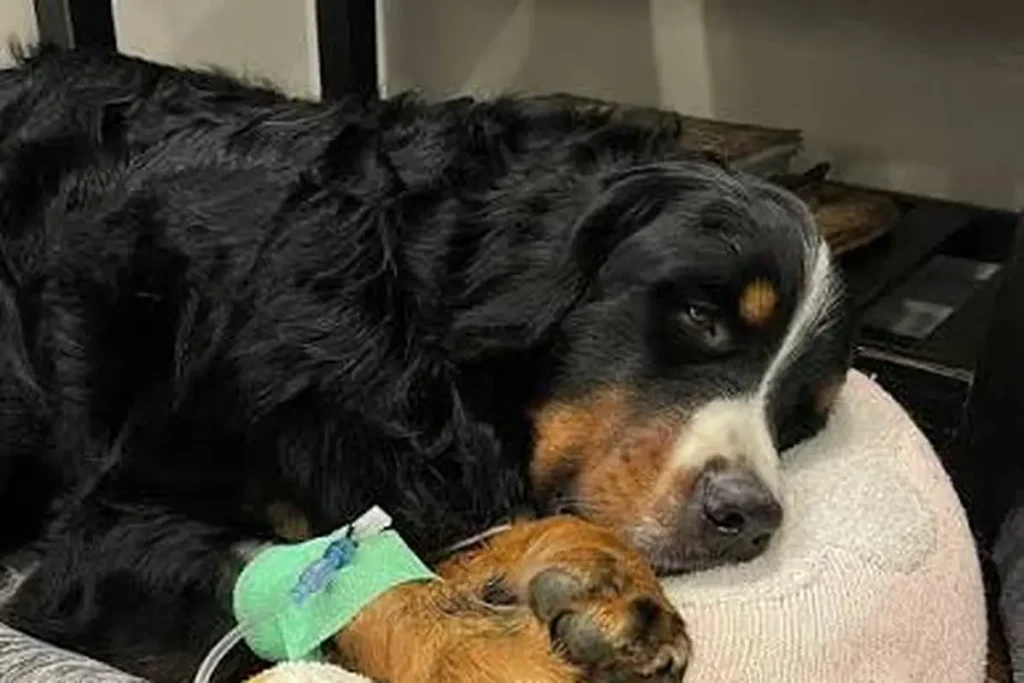
The American Kennel Club lists the Bernese Mountain Dog’s typical lifespan at 7 to 10 years. In practice, real owner experiences range from 4.5 years on the heartbreaking end to 13 years for dogs from health-tested breeding lines. Data shared in the BMD community suggests approximately 17% of Bernese Mountain Dogs die before the age of 5 – a figure that experienced Berner owners see reflected repeatedly in breed forums, support groups, and health registries like BernerGarde.
The primary reason for the shortened lifespan is cancer – specifically histiocytic sarcoma, found at an unusually high rate in this breed compared to virtually all others. The two most important factors that influence where a Berner lands in that lifespan range are breeder genetics and preventive care. A puppy from health-tested parents, registered with BernerGarde, from a breeder connected to the Bernese Mountain Dog Club of America (BMDCA), has a significantly better statistical chance than one from untested lines.
The 15 Most Common Bernese Mountain Dog Health Problems
Bernese Mountain Dogs face health challenges on two fronts simultaneously. As a large, deep-chested breed, they share certain conditions with other giants – joint problems, bloat, cruciate tears. But they also carry a set of breed-specific genetic conditions that set them apart entirely. Understanding both is what makes Berner ownership different from owning any other large breed.
1. Cancer – The Leading Cause of Death in Bernese Mountain Dogs
No honest guide to BMD health starts anywhere else. Cancer kills more Bernese Mountain Dogs than any other condition, and it does so at a rate that continues to shock owners coming to the breed from other backgrounds.
The most feared is histiocytic sarcoma, sometimes called malignant histiocytosis. It is considered a breed-specific cancer – no other breed carries the same degree of genetic predisposition. Histiocytic sarcoma is aggressive and fast-moving. A dog that seemed healthy at a routine checkup can deteriorate within weeks of diagnosis. It can appear in the lungs, spleen, liver, lymph nodes, brain, or bone marrow. By the time symptoms become obvious, it has often spread to multiple systems.
Lymphoma is the second most common cancer in BMDs, affecting the lymphatic system. Depending on the type and stage, it may respond to chemotherapy – some dogs achieve remission for months to over a year. Hemangiosarcoma is a blood vessel cancer that frequently involves the spleen or heart, capable of causing sudden internal bleeding with almost no prior warning. A dog can collapse without obvious prior illness. Mast cell tumors appear as skin lumps that can look benign but carry malignant potential – any lump on a Berner that changes quickly or feels unusual warrants a fine needle aspirate, not watchful waiting.
Warning signs to watch for: unexplained weight loss over a few weeks, persistent lethargy that is out of character, sudden reluctance to eat, pale or white gums, any lump appearing and growing quickly, labored breathing or new coughing, and abdominal swelling.
What owners can do: establish a baseline through annual blood panels from age 2 onward, perform monthly owner lump checks (write down location and approximate size), and do not delay a vet visit when something seems off. With histiocytic sarcoma, speed matters. The BMD Vitality Project is an outcross breeding program specifically aimed at improving the breed’s genetic health and reducing inherited disease burden – it is currently the only program of its kind active for this breed.
2. Hip Dysplasia
Hip dysplasia is a developmental condition in which the hip socket forms improperly, causing the ball of the femur to sit loosely in the joint. Over time the cartilage wears down, inflammation sets in, and arthritis progresses. It is one of the most common orthopedic conditions in large breeds, and Bernese Mountain Dogs are among the most affected.
Signs include a swaying or “bunny hopping” gait, reluctance to climb stairs or jump into the car, stiffness after rest, reduced willingness to exercise, and visible discomfort when rising. In young dogs the signs can be subtle – a slight hesitation you notice gradually over weeks. Severity ranges widely. Some dogs with mild dysplasia live comfortably for years with weight management, joint supplements like glucosamine and omega-3s, and anti-inflammatory medication. Severe cases require surgery – either femoral head osteotomy (FHO) or total hip replacement, which costs between $3,500 and $8,000 per hip.
Responsible breeders have both parents OFA-certified for hips (rated Fair, Good, or Excellent) before any breeding decision. Ask for the OFA certificate number directly – not just the breeder’s verbal assurance.
3. Elbow Dysplasia
Elbow dysplasia is an umbrella term covering several related conditions – osteochondritis dissecans (OCD), ununited anconeal process (UAP), and fragmented medial coronoid process – all involving abnormal development of the elbow joint. It is very common in large and giant breeds, and what makes it particularly frustrating in BMDs is that it is often bilateral, affecting both front legs simultaneously.
Signs include front leg lameness that worsens after exercise, stiffness when first getting up, holding one leg slightly elevated, and reduced range of motion in the front legs. In puppies it may first appear between 4 and 10 months as an intermittent front leg limp. OFA elbow certification is separate from hip certification – check for both when evaluating a breeder. Surgical options range from arthroscopic cleaning of loose cartilage fragments to full elbow replacement in advanced cases.
4. Bloat and GDV – A Life-Threatening Emergency
Gastric dilatation-volvulus (GDV) is not a condition you have time to watch and wait on. It kills within hours without surgery.
The first stage – gastric dilatation – is when the stomach fills with gas and expands. In the second and fatal stage, the stomach twists on itself (volvulus), cutting off blood supply to the stomach and spleen, and preventing the dog from releasing any gas at all. Without emergency surgery, most dogs die. Bernese Mountain Dogs are at elevated risk due to their large, deep-chested body structure.
Signs of GDV: unproductive retching (trying to vomit but nothing comes up, or only frothy saliva), a visibly distended and hard abdomen, the dog is restless and unable to get comfortable, excessive drooling, and gums that turn pale or white. If you see these signs together, do not drive to your regular vet. Go to the nearest emergency animal hospital immediately and call ahead.
Gastropexy is a surgical procedure that tacks the stomach to the abdominal wall, preventing the fatal twist even if bloat occurs. It does not prevent bloat itself, but it eliminates the volvulus – the component that kills. Prophylactic gastropexy can be performed at the same time as a spay or neuter procedure, adding approximately $400 to $600 to that surgery’s cost. Compared to emergency GDV surgery ($3,000 to $8,000), and given that GDV without prior gastropexy is often fatal – especially after hours when emergency clinics may be far away – many experienced BMD owners and breeders strongly recommend it. Ask your vet about timing when planning spay or neuter.
Feeding practices that may reduce risk: multiple smaller meals rather than one large daily meal, and avoiding vigorous exercise for at least one hour before and after eating.
5. Degenerative Myelopathy
Degenerative myelopathy is a progressive spinal cord disease that shares significant similarities with ALS in humans. It begins in the hind end and moves forward. Dogs first show mild weakness and incoordination in the rear legs, may scuff their paws when walking, and gradually lose the ability to support weight on their back end. Full paralysis follows over months.
It is not a painful condition. Dogs do not experience the sensation of the limbs failing. But the progression is irreversible, and there is no cure. A genetic test exists for the SOD1 mutation that predisposes dogs to DM – responsible breeders test both parents and avoid pairing two DM-affected dogs. Ask for DM DNA test results when evaluating a breeder. Management focuses on quality of life through physical therapy, mobility aids, and excellent care as the disease progresses.
6. Progressive Retinal Atrophy (PRA)
Progressive retinal atrophy (PRA) is an inherited eye disease in which the retina degenerates gradually, leading first to night blindness and eventually to total blindness in both eyes. The first sign owners typically notice is hesitation in dim light – a dog that was always confident becomes uncertain at dusk, or bumps into things at night before any daytime problems appear.
PRA is entirely inherited and irreversible. CAER (Canine Eye Registry Foundation) certification for breeding dogs confirms clear eyes at time of examination, and DNA tests are available for specific PRA mutations. Both should be in a reputable breeder’s health paperwork. Blind dogs adapt surprisingly well when their home environment stays consistent – keep furniture in the same place, use scent cues, and maintain routine. Most continue to live confidently and happily.
7. Von Willebrand Disease (vWD)
Von Willebrand disease is the most common inherited bleeding disorder in dogs. It involves a deficiency of von Willebrand factor, a protein required for normal blood clotting. Type I – the form most common in Bernese Mountain Dogs – is usually mild, and many affected dogs live their entire lives without a serious bleeding episode. The danger arises during surgery or after significant trauma, when blood does not clot the way it should.
Signs include prolonged bleeding from small cuts, nosebleeds, blood in urine, excessive bleeding during heat cycles, and unusual bruising. Many dogs show no visible signs until a surgical procedure reveals the problem. A DNA test identifies carriers, affected dogs, and clear dogs – ask breeders for results. If your dog has vWD, tell your vet before any surgery, including routine procedures like dental cleanings, so they can prepare accordingly.
8. Hypothyroidism
Hypothyroidism is very common in Bernese Mountain Dogs. The thyroid gland produces insufficient thyroid hormone, gradually slowing the body’s metabolic processes. Signs develop slowly and are easy to attribute to age or other causes: weight gain without increased eating, lethargy, cold intolerance (seeking heat), dry or brittle coat, hair loss along the flanks and tail, recurring skin infections, and a generally dull or slowed demeanor.
Diagnosis is a simple blood test measuring T4 and TSH levels. Treatment is once-daily levothyroxine – inexpensive and extremely effective. Most dogs show marked improvement within 4 to 8 weeks of starting treatment. The condition is not life-threatening when managed, but undiagnosed hypothyroidism causes real suffering and secondary health problems over time. Annual thyroid panels are recommended from age 4 or 5 onward.
9. Allergies and Skin Conditions
Allergies are common in BMDs and affect owners’ quality of life as much as the dogs’. Both environmental allergies (pollens, grasses, dust mites, mold) and food sensitivities are seen regularly in the breed. Signs of environmental allergies include chronic itching, paw licking and chewing, recurring ear infections, red or irritated skin around the face and belly, and hot spots – moist, inflamed patches of skin that can develop quickly under the dense Berner coat.
For US owners in warmer climates – the South, Southwest, and humid Southeast – hot spots are a particularly common problem. The double coat traps heat and moisture, and in warm or humid conditions hot spots can develop and worsen rapidly. Food sensitivities are also very common in BMD puppies between 2 and 10 months. Many Berner puppies have sensitive digestive systems, causing loose stools, gas, and intermittent vomiting during this period – often resolving as the dog matures. A high-quality food with a simple protein source, such as Purina Pro Plan Sensitive Skin and Stomach, is frequently recommended in the BMD owner community as an effective starting point.
10. Cruciate Ligament Tears (CCL)
The cranial cruciate ligament (CCL) in dogs is the equivalent of the ACL in humans. When it tears, the knee becomes unstable, and the dog cannot put weight on the leg. In large breeds, CCL tears are often the result of chronic degeneration rather than a single dramatic incident. A large Berner carrying extra weight, exercising on hard surfaces, or genetically predisposed to ligament laxity can experience a partial tear that worsens over weeks before full rupture.
Signs include sudden rear leg lameness, toe-touching with one rear leg, or complete non-weight-bearing after a jump or running turn. Surgical repair is almost always recommended for large breeds – TPLO (tibial plateau leveling osteotomy) is the gold standard approach. One important reality many owners don’t anticipate: approximately 50% of dogs that tear one CCL will tear the other within 1 to 2 years. Plan financially for both legs. Cost per leg: $4,000 to $7,000.
11. Osteochondrosis (OCD)
Osteochondrosis is a cartilage development disorder in which a flap of cartilage detaches within a joint. It most commonly affects the shoulder in Bernese Mountain Dogs, but can also occur in elbows, hocks, and knees. It is a condition of fast-growing large-breed puppies, typically appearing between 4 and 10 months. Signs include front leg lameness in a young dog that is worse after exercise. Surgical removal of the cartilage flap is usually necessary for significant cases. Prevention centers on feeding a large-breed puppy food formulated for controlled growth rate rather than adult or high-calorie puppy food designed for toy breeds.
12. Panosteitis – Growing Pains
Panosteitis is painful inflammation of the long bones that affects large-breed puppies between 5 and 18 months of age. The hallmark sign is shifting lameness – a puppy who limps on one leg for a few days, then appears to favor another leg, then improves, then shifts again. This moving pattern is the most reliable indicator that you are looking at pano rather than a joint condition.
The reassuring news: panosteitis is self-limiting. It resolves on its own as growth slows. Management involves rest during flare-ups and mild pain relief directed by your vet. No surgery, no permanent damage. If your Berner puppy is limping and the lameness moves between legs, call your vet but do not panic – this is very likely panosteitis, and it ends.
13. Kidney Disease and Glomerulonephritis
Bernese Mountain Dogs have a documented higher prevalence of immune-mediated glomerulonephritis – a kidney condition caused by immune complex deposits in the kidney’s filtering units. This is distinct from general age-related kidney decline and can affect younger dogs. Signs of kidney disease are non-specific in early stages: increased thirst, increased urination, gradual weight loss, reduced appetite, and intermittent vomiting. Annual blood panels from age 5 that include BUN, creatinine, and SDMA (a sensitive early kidney marker) allow for early detection and meaningful intervention before significant function is lost.
14. Cardiac Disease
Subvalvular aortic stenosis (SAS) is the most significant cardiac condition in BMDs – a narrowing of the aortic valve that restricts blood flow from the heart. Severity ranges from trivial (no treatment needed) to severe (high risk of sudden death during exertion). Many cases are first detected as a heart murmur during a routine physical exam. Cardiac OFA certification is available and recommended for breeding dogs. If a murmur is detected at any point in your Berner’s life, ask for a referral to a veterinary cardiologist for a full echocardiogram to characterize the murmur and assess its true significance.
15. Separation Anxiety
Separation anxiety belongs in any complete BMD health guide because it is a genuine welfare issue that affects a significant portion of the breed. Berners are intensely attached to their families – they were bred to work alongside people, and isolation is contrary to their nature. Signs include destructive behavior directed at exits when the dog is alone, excessive barking or howling, house soiling despite being fully house-trained, pacing and panting, and signs of distress that begin as the owner prepares to leave.
Management is most effective when started early. Puppies gradually accustomed to alone time in positive increments develop more independence than those who are never left alone until they suddenly have to be. For established anxiety, a combination of behavior modification, environmental enrichment, and sometimes medication (fluoxetine or trazodone) produces the best outcomes. This is not a training failure – it is a breed characteristic that deserves a thoughtful management plan.
Why Are Bernese Mountain Dogs So Prone to Health Issues? The Genetics Behind the Breed
The health challenges in Bernese Mountain Dogs trace directly to the breed’s history. By the early 20th century, the Berner Sennenhund (the German name for the breed, meaning Bernese Alpine Herdsman’s Dog) had nearly disappeared from Switzerland. Working farm dogs had been replaced by machinery, and few breeding-quality animals remained. The breed was rebuilt from a very small founding population – a genetic bottleneck that created a narrow gene pool from which all modern Bernese Mountain Dogs descend.
A narrow gene pool means unfavorable recessive genes – including those associated with cancer and immune dysfunction – became concentrated in the breed’s genetic makeup in a way that is very difficult to breed out quickly. The situation was then compounded by the breed’s surge in popularity across the United States over the past 15 to 20 years. Rising demand exceeded the capacity of responsible, health-testing breeders, and dogs from untested lines multiplied throughout the country.
It is worth directly addressing a question that comes up repeatedly in owner communities: are Berners from Switzerland or Europe healthier? The answer is not significantly. The genetic predispositions are breed-wide. A Swiss-imported Berner from untested lines carries the same genetic risk as a US-bred Berner from untested lines. What matters is whether the specific breeding dogs were health-tested – not where they were born.
The organizations working to improve this picture include the BMDCA, which maintains health research data and a breeder referral program; BernerGarde, a voluntary health database tracking individual dogs’ health histories and causes of death across generations; and the BMD Vitality Project, which is conducting controlled outcrossing with other breeds to introduce genetic diversity. The Vitality Project is the only program of its kind currently active for this breed, and it is cited frequently in the serious BMD owner community as a meaningful long-term effort.
How to Choose a Healthy Bernese Mountain Dog – The Breeder Health Testing Checklist
The single most powerful thing any prospective Berner owner can do happens before the puppy comes home: choosing a breeder who conducts comprehensive health testing on their breeding dogs. Here is what to ask for and what documentation you should actually see:
| Health Test | What It Evaluates | Certifying Body |
|---|---|---|
| OFA Hip Evaluation | Hip joint formation rated Fair, Good, or Excellent | Orthopedic Foundation for Animals (OFA) |
| OFA Elbow Evaluation | Elbow joint health rated Normal or Abnormal | OFA |
| CAER Eye Exam | Hereditary eye diseases including PRA | Canine Eye Registry Foundation (CAER) |
| OFA Cardiac Exam | Heart defects including subvalvular aortic stenosis | OFA |
| Von Willebrand Disease DNA | vWD carrier status (Type I) | Embark, DDC Veterinary, or similar |
| Degenerative Myelopathy DNA | SOD1 mutation carrier status | Embark, OptiGen, or similar |
| Progressive Retinal Atrophy DNA | PRA mutation status | Embark, OptiGen, or similar |
| BernerGarde Registration | Voluntary multi-generational health data entry | BernerGarde database |
BernerGarde deserves a fuller explanation because it comes up constantly among serious BMD owners and is poorly understood by newcomers. BernerGarde is a voluntary database maintained specifically for Bernese Mountain Dogs. Breeders, owners, and veterinarians contribute health data – OFA results, diagnoses, causes of death, DNA test results – for individual dogs. The database allows prospective buyers to look up a specific dog by name and see not just that dog’s own health data, but their parents’, grandparents’, and siblings’ records. You can see, in real data, how long the dogs in a lineage have lived and what they died from. It is a genuinely powerful tool. Ask your breeder: “Are your breeding dogs registered on BernerGarde? Can I look them up?” A serious breeder will say yes without hesitation.
The BMDCA breeder referral program requires member breeders to meet health testing standards higher than AKC registration alone. A breeder who is a BMDCA member in good standing is not a guarantee, but it is a meaningful floor to start from.
Red flags to avoid: no OFA certificates to show, only verbal assurance that “the vet checked them”; puppies always available with no waitlist; multiple litters from multiple breeds simultaneously; unwilling to let you meet the parents by video before purchase; AKC registered as the sole health credential; and reluctance to discuss health outcomes in previous litters.
On neutering timing: growing veterinary literature and strong real-owner consensus support waiting until 18 to 24 months before spay or neuter in large breeds like BMDs. Sex hormones play a role in musculoskeletal development and certain immune functions, and early alteration may increase risk for specific orthopedic conditions and some cancers in predisposed breeds. This is a nuanced conversation to have with your own vet, taking into account your dog’s individual situation – but it is a conversation worth having rather than defaulting to 6-month sterilization because that was the standard recommendation for a different breed.
Preventive Care Timeline for Bernese Mountain Dogs
Prevention in a Berner is not a single vet visit. It is a longitudinal plan that changes as the dog ages – and given their shorter expected lifespan, every life stage matters more than it would in a breed that routinely lives to 14.
Puppy Stage (0 to 12 Months)
- Core vaccines and parasite prevention per your vet’s protocol
- Large-breed puppy food to support controlled growth rate – do not use adult food or calorie-dense toy breed puppy formulas
- Socialization during the critical window (8 to 16 weeks) reduces probability of serious separation anxiety later
- Get pet insurance before the first birthday – ideally before the first vet visit that records anything as a diagnosis
- At 6 to 9 months: discuss gastropexy with your vet if planning concurrent spay or neuter
- Preliminary hip X-rays available at 4 months (not OFA official but useful for early monitoring)
Young Adult (1 to 3 Years)
- Official OFA hip and elbow radiographs at 2 years minimum for certification
- Baseline thyroid panel at age 2 for reference as the dog ages
- Annual comprehensive wellness exam
- Spay or neuter timing discussion with your vet: 18 to 24 months for large breeds
- Complete genetic testing if breeder did not provide full results
Prime Adult (4 to 7 Years)
- Bi-annual vet exams recommended – BMDs age quickly and six months is a long time in a 7-to-10-year lifespan
- Annual blood panel: CBC, chemistry, thyroid, and kidney function including SDMA
- Monthly owner lump checks: know your dog’s body, note location and size of any masses
- Eye exam every 2 years
- Begin joint health supplement discussion with your vet if any stiffness is appearing
- Cardiac auscultation at every exam
Senior Stage (7 Years and Older)
- Twice-yearly comprehensive exams – non-negotiable at this life stage
- Expanded annual blood panels with organ function closely monitored
- Cancer surveillance conversation with your vet: what to watch for, whether any imaging is appropriate
- Quality of life assessment: mobility, pain levels, appetite, joy in daily activities
- Comfort care planning: joint pain management, appropriate exercise modifications, mobility support as needed
The Real Cost of Owning a Bernese Mountain Dog in the US
Berners are not an inexpensive breed to own. The honest financial picture matters before the puppy comes home, not after the first emergency.
Routine Annual Costs
- Quality large-breed food: $100 to $150 per month
- Routine vet care (annual exam, vaccines, heartworm and flea prevention): $500 to $1,500 per year depending on location
- Professional grooming every 6 to 8 weeks: $80 to $150 per session
- Pet insurance: $80 to $150 per month. BMDs are classified as a high-risk breed by most insurers, and premiums reflect that accurately
Common Emergency and Procedure Costs
- GDV emergency surgery: $3,000 to $8,000
- Prophylactic gastropexy (at time of spay/neuter): $400 to $600
- Hip replacement (single hip): $3,500 to $8,000
- Elbow surgery: $2,000 to $5,000
- TPLO cruciate repair: $4,000 to $7,000 per leg
- Cancer treatment (surgery, chemotherapy, or combination): $5,000 to $20,000 or more
- Foreign body obstruction surgery: $2,000 to $5,000
- Kidney disease management (ongoing): $2,000 to $5,000 per year
Realistic lifetime estimate for a typical Bernese Mountain Dog: $25,000 to $50,000 or more over their lifespan. On pet insurance – in the BMD owner community, the near-universal advice from experienced owners is get it early and use it. One owner shared spending $10,000 in emergency vet bills in the first two years alone, with insurance covering 90% of it. That is not an outlier story for this breed. Healthy Paws and Nationwide are frequently mentioned positively in the BMD community – though any policy is worth reading carefully for breed-specific exclusions and annual versus lifetime benefit limits before you commit.
Emergency Warning Signs – When to Act Immediately
Go to an emergency vet now. Do not wait until morning.
- Distended or hard abdomen combined with unproductive retching (GDV until proven otherwise – this is life or death)
- Pale, white, gray, or blue gums
- Sudden inability to stand or use back legs
- Open-mouth breathing or labored breathing with neck stretched forward
- Sudden collapse that does not resolve within seconds
- Uncontrolled bleeding
Call your vet the same day:
- Sudden lameness in any leg that has not resolved within one to two hours
- Refusing food for more than 12 to 24 hours
- Persistent vomiting or diarrhea more than once or twice
- A new lump appearing quickly or one that changes size over days
- Unusual lethargy significantly out of character
- Sudden coughing or breathing changes – see our complete guide on why dogs cough and when it is serious
Monitor and schedule within a few days:
- Mild lameness in a young dog that shifts between legs (likely panosteitis)
- Gradual coat or skin changes
- Gradual rather than sudden energy reduction