
My Dog Has a Rash on His Belly and Inner Thighs: Causes, Treatments, and When to See a Vet
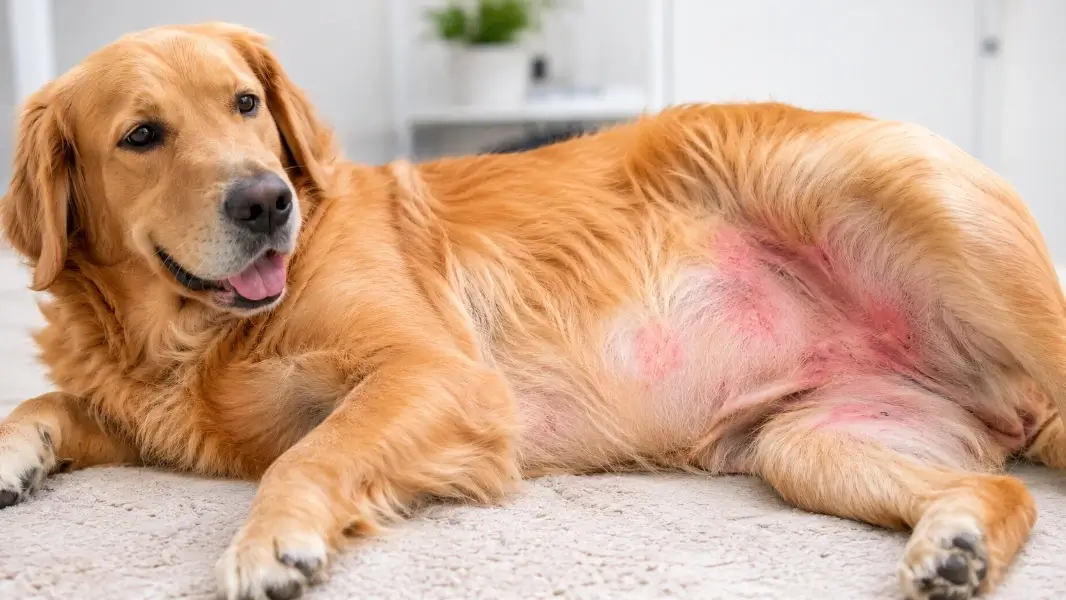
You noticed it during belly rub time. A red, irritated patch on your dog’s belly or inner thighs that wasn’t there before.
Before you panic – this is one of the most common skin problems in dogs. The belly and inner thighs are almost always the first place a rash shows up. And in most cases, there’s a clear reason why.
The most likely causes are environmental allergies, a yeast or bacterial skin infection, fleas, or contact with an irritant like lawn chemicals or road salt. Some cases clear up at home in a week. Others need a vet.
This guide covers everything: what the rash looks like, what’s causing it, what home remedies actually work, what makes it worse, and when to get help.
Why Do Dogs Get Rashes on Their Belly and Inner Thighs?
These two spots get rashes more than anywhere else on a dog’s body. Here’s why.
The belly and inner thighs have almost no fur. When your dog lies on grass, carpet, or pavement, that bare skin touches every allergen, bacteria, and irritant on that surface directly. No hair barrier, no protection.
The inner thighs also stay warm and slightly damp. That creates the perfect environment for yeast (Malassezia) and bacteria (Staphylococcus) to grow out of control.
Add the fact that dogs can easily lick these spots – and you get a feedback loop. Irritation causes licking. Licking breaks down the skin. Broken skin gets infected. The infection gets worse. And around it goes.
That cycle is the reason a small red patch can turn into a serious infection in just a few days if you don’t stop it early.
What Does a Dog Belly Rash Look Like? (Type-by-Type Guide)
Different rashes look different. Knowing what you’re looking at tells you a lot about what’s causing it.
Flat Red Patches
Small, flat areas of redness with no raised bumps. This is usually the earliest stage of a reaction – often from contact with something irritating like a floor cleaner, fertilizer, or new shampoo. The skin is red but intact.
Raised Bumps or Pimples with White Centers (Pustules)
Clusters of small pimple-like bumps on the belly. If they have a white or yellow center, those are pustules filled with pus. This is a sign of bacterial infection (pyoderma) caused by Staphylococcus bacteria. In puppies, this pattern on the lower belly is called impetigo.
Circular Patches with a Ring Border (Ringworm)
A round rash with a raised outer ring and clearer skin in the center. This is the classic look of ringworm – which is not actually a worm. It’s a fungal infection caused by Microsporum canis or Trichophyton. It causes hair loss and can spread. Important: ringworm is contagious to people, especially children.
Dark, Thick, Leathery Skin (Chronic Inflammation)
If the skin looks brownish-gray and feels thick or rough, that’s called hyperpigmentation. It means the problem has been going on for a long time. Chronic allergies, recurring yeast infections, and hormonal problems like hypothyroidism or Cushing’s disease can all cause this.
Wet, Raw, Weeping Patches (Hot Spots)
Hot spots – also called acute moist dermatitis – are raw patches of wet, inflamed skin. They appear fast (sometimes overnight) and grow quickly because dogs can’t stop licking them. They’re intensely itchy and can get very large in 24 hours.
General Redness with Non-Stop Itching
If your dog is constantly scratching and the belly, inner thighs, paws, and ears are all red, you’re probably looking at atopic dermatitis – an allergic reaction to something in the environment or food.
9 Causes of Belly and Inner Thigh Rashes in Dogs
These are the nine most common causes. Some are mild. Some need a vet right away.
1. Environmental Allergies (Atopic Dermatitis)
Environmental allergies – also called atopic dermatitis – are the number one cause of recurrent belly rashes in dogs. The main triggers are pollen (grass, trees, weeds), dust mites, mold spores, and dander.
The belly and inner thighs almost always show symptoms first because that skin touches the ground and is thinly haired. Dogs with atopic dermatitis are also itchy on their paws, face, and ears. You’ll see redness, repeated licking, and sometimes dark skin from chronic scratching.
Seasonal patterns are a clue. If your dog gets worse in spring or fall, environmental allergies are very likely the cause.
2. Food Allergies
Food allergies look almost identical to environmental allergies. The itching, redness, and rash pattern are the same. The main difference is timing – food allergy symptoms are year-round, not seasonal.
The most common food triggers in dogs are beef, chicken, dairy, wheat, and eggs. Food allergies are diagnosed with an elimination diet – usually 8 to 12 weeks on a hydrolyzed or novel protein food your vet prescribes.
3. Contact Dermatitis
Contact dermatitis happens when something directly touches the skin and causes a reaction. The most common culprits are lawn fertilizers and pesticides, floor cleaning products, plastic food bowls (which can leach chemicals over time), new laundry detergents or fabric softeners on pet bedding, rubber or latex materials, road salt in winter, and carpet deodorizers.
The rash appears only where skin touched the irritant. Belly and inner thighs are prime spots because they contact grass, floors, and carpet directly.
Switching to stainless steel food bowls and rewashing pet bedding in fragrance-free detergent often makes a noticeable difference within days.
4. Flea Allergy Dermatitis (FAD)
Flea allergy dermatitis (FAD) is an allergic reaction to flea saliva. Even one flea bite can trigger a full-blown reaction in a sensitive dog. You don’t need to see fleas on your dog to have FAD – fleas bite and jump off quickly.
FAD typically causes severe itching at the base of the tail and inner thighs, plus belly redness. Look for tiny black specks (flea dirt) in the fur. Put them on a wet white paper towel – if they turn red, that’s digested blood, confirming fleas.
Year-round flea prevention is the only real fix. Even indoor dogs can get fleas from rodents, wildlife, or visitors.
5. Yeast Infection (Malassezia Dermatitis)
Malassezia pachydermatis is a yeast that naturally lives on dog skin. Problems start when it overgrows – usually triggered by allergies, dampness, or antibiotic use that kills off competing bacteria.
Yeast rashes have a distinctive smell – musty or corn-chip like. The skin looks greasy, the fur is discolored brown-orange, and the dog is relentlessly itchy. The inner thighs, armpits, and ear canals are the classic spots. If your dog is also showing signs of recurring ear infections, it’s a strong indicator that the same yeast overgrowth is affecting multiple areas at once.
Antifungal shampoos (chlorhexidine plus miconazole) and sometimes oral antifungals are needed to clear it. If you treat only the symptoms and not the underlying allergy driving the overgrowth, it comes right back.
6. Bacterial Skin Infection (Pyoderma)
Pyoderma means bacterial infection of the skin. The most common culprit is Staphylococcus pseudintermedius, a normal skin bacteria that gets out of control when the skin barrier is broken.
Surface pyoderma shows up as red patches, pustules, and circular shedding patches called epidermal collarettes – think of a ring of peeling skin with a red center. In puppies, impetigo causes small pus-filled bumps on the belly, usually clearing up without treatment as they get older.
Deeper infections called deep pyoderma need oral antibiotics, often for several weeks. This is a vet-only situation.
7. Mange (Sarcoptes scabiei and Demodex)
Two different mites cause mange, and they behave very differently.
Sarcoptic mange (caused by Sarcoptes scabiei) is intensely itchy and highly contagious to other pets and people. It starts on the belly, inner thighs, and ear margins. Dogs will scratch until their skin is raw and bleeding. This is a vet emergency.
Demodectic mange (caused by Demodex) is not contagious and not particularly itchy. It causes localized hair loss patches and mild redness, usually in young dogs or dogs with weakened immune systems. Small patches in young dogs often resolve on their own. Generalized cases need treatment.
Both are diagnosed with a skin scraping at the vet – you can’t tell them apart at home.
8. Ringworm (Fungal Infection)
Despite the name, ringworm is not a worm. It’s a fungal infection caused by Microsporum canis or Trichophyton species. It creates the classic ring-shaped lesion with a raised outer border and hair loss inside the ring.
Ringworm is contagious between pets and transmissible to people – especially kids, the elderly, and anyone immunocompromised. If you see a suspicious circular rash on your dog, wash your hands after handling them, and keep children away until it’s been diagnosed.
Treatment includes antifungal shampoos, topical creams, and sometimes oral antifungals. Environmental decontamination of bedding and surfaces is also needed to prevent reinfection.
9. Hormonal Imbalances (Cushing’s Disease and Hypothyroidism)
When other causes have been ruled out and the rash keeps coming back, hormonal problems are worth investigating.
Cushing’s disease (hyperadrenocorticism) causes the body to produce too much cortisol. This weakens the immune system and skin barrier, leading to recurring bacterial and yeast infections. The belly often develops thin, almost transparent skin with a pot-bellied look, plus hair loss.
Hypothyroidism (underactive thyroid) causes thick, dull coat, weight gain, and recurring skin infections that don’t clear up properly. Both conditions are diagnosed with blood tests and are very manageable once identified.
Immune thrombocytopenia (ITP) is a blood platelet disorder that can cause small bruise-like spots on the belly called petechiae. These look like a rash but are actually tiny hemorrhages under the skin. If you see small purple or red dots on your dog’s belly, see a vet the same day.
The Licking Cycle – Why Small Rashes Become Big Problems
This is something most dog owners don’t hear about until it’s too late.
When a dog’s skin itches, they lick. That instinct makes perfect sense – licking cleans wounds and brings temporary relief. The problem is what happens next.
A dog’s saliva is full of bacteria. When your dog licks a patch of irritated skin, that bacteria enters the already-compromised skin barrier. The bacteria multiply. The area gets redder and more inflamed. That means more itching. More itching means more licking. And the cycle continues.
What starts as a mild red patch can turn into a full bacterial infection in 48 to 72 hours if the licking continues unchecked. Hot spots – areas of acute moist dermatitis – can grow from quarter-sized to palm-sized overnight.
Breaking the licking cycle is often the first and most important thing you can do. An e-collar (cone) is not cruel – it’s what allows the skin to actually heal. Without it, any treatment you apply gets licked off within minutes, and the skin can’t recover.
If your dog is licking a spot obsessively, don’t wait to see if it gets better. Put the cone on, clean the area, and call your vet if it doesn’t improve in 24 to 48 hours.
Home Remedies for Dog Belly Rash – What Actually Works
These remedies can genuinely help mild rashes. They are not substitutes for veterinary care when the rash is severe, spreading, infected, or causing significant distress.
Oatmeal Bath
Colloidal oatmeal is one of the most well-supported home remedies for itchy, irritated dog skin. It contains avenanthramides and beta-glucan, which reduce inflammation and soothe the skin barrier.
Use plain, unflavored colloidal oatmeal (like Aveeno plain oatmeal, no additives) or a veterinary oatmeal shampoo. Soak the dog for 5 to 10 minutes, then rinse thoroughly. Pat dry – never rub. Use once or twice weekly during a flare.
Cool Compresses
A clean cloth soaked in cool water and applied to the rash for 5 to 10 minutes reduces inflammation and brings temporary relief. Use this multiple times a day if needed. Avoid ice – it can cause frostbite on sensitive skin.
Chlorhexidine Spray or Wipes
Chlorhexidine gluconate is a veterinary-grade antibacterial and antifungal antiseptic. At 2% to 4% concentration, it’s available over the counter in veterinary antiseptic sprays and medicated wipes.
It’s effective against both Staphylococcus (bacterial infections) and Malassezia (yeast infections). Gently clean the affected area once or twice daily. This is one of the most practical and veterinarian-recommended at-home steps you can take.
Antihistamines for Allergy Flares
For mild allergy-related itching, Benadryl (diphenhydramine – plain, no decongestants or xylitol) can provide temporary relief. The standard dose for dogs is 1 mg per pound of body weight, up to three times daily. Always confirm the dose with your vet before giving, especially for puppies, senior dogs, or dogs with other health conditions.
Antihistamines work best for mild allergic reactions. They won’t do much for severe atopic dermatitis – that usually needs prescription medication.
Veterinary-Approved Spot Treatments
Dr. Lindsay Butzer DVM, a small animal veterinarian, recommends keeping veterinary antiseptic wipes on hand for early-stage skin flares. Cleaning the area promptly prevents the bacterial overload that turns a simple irritation into a full infection.
Hydrocortisone sprays at 1% concentration are available without a prescription and can reduce mild redness and itching. Use only on intact (unbroken) skin. Do not use near eyes, and don’t allow your dog to lick the area after application.
What NOT to Do – Home Remedies That Make It Worse
These are mistakes that show up constantly in dog owner forums. Some seem logical. All of them can make the problem significantly worse.
Baby powder or cornstarch. Baby powder dries the skin but provides a food source for bacteria. Cornstarch is even worse – Malassezia (yeast) is lipid-dependent and uses carbohydrates for energy. Cornstarch on a yeast-infected area actively feeds the infection.
Coconut oil on a yeast infection. Coconut oil is promoted heavily online as a cure for dog skin problems. For dry, non-infected skin, it may help. But Malassezia is a lipid-dependent organism – it requires fatty acids to survive and replicate. Applying a fat-rich oil to a yeast infection provides exactly the nutrients the yeast needs to grow. If your dog has the musty corn-chip smell of a yeast infection, skip the coconut oil.
Human hydrocortisone cream on broken skin. Over-the-counter human hydrocortisone cream contains preservatives and other ingredients formulated for human skin. On broken, raw, or infected skin, it can further compromise the barrier. Use only on intact skin, sparingly, and choose a veterinary-formulated version if possible.
Hydrogen peroxide or rubbing alcohol. Both damage healthy skin cells and delay healing. Hydrogen peroxide is toxic to fibroblasts – the cells responsible for tissue repair. Never put these on a skin wound or rash.
Neosporin. Plain Neosporin (triple antibiotic ointment) on a small wound is generally considered safe for dogs. The problem is the antibiotic. Applying antibiotic ointment to a yeast infection or an allergic rash does nothing useful and encourages antibiotic resistance in skin bacteria. If you’re not sure what type of rash it is, skip it.
Waiting more than 48 to 72 hours on a spreading rash. This is the most dangerous mistake. A mild surface irritation can turn into a deep bacterial infection within days. If the rash is spreading, your dog is not sleeping from itching, there’s pus or discharge, or the skin looks raw and wet – call your vet now.
When to Call the Vet
Some rashes respond to home care. Others won’t. Here’s the clear line between watchful waiting and getting professional help.
See a Vet Within 24 to 48 Hours If…
- The rash is spreading despite home treatment.
- There are pustules (pimple-like bumps with white or yellow centers).
- The skin is raw, wet, or weeping – signs of a hot spot or infected area.
- Your dog cannot sleep due to itching.
- The rash has a foul or musty odor.
- You see circular lesions with a raised border and central hair loss (possible ringworm).
- Your dog is licking so intensely that the skin is breaking down.
- You’ve tried home remedies for 48 hours with no improvement.
Go to an Emergency Vet Immediately If…
- You see small purple or red spots on the belly that look like tiny bruises (possible petechiae – a sign of ITP or other blood disorder).
- Your dog is in extreme distress, cannot stop scratching, or has scratched an area until it’s bleeding severely.
- The rash appeared suddenly alongside facial swelling, hives all over the body, or labored breathing (possible allergic reaction).
- You suspect sarcoptic mange – it spreads fast and is contagious.
What Your Vet Will Do
Knowing what to expect helps you prepare and ask better questions.
Physical Exam and History
Your vet will examine the rash closely and ask about when it started, whether it’s seasonal, whether anything changed recently (food, cleaning products, flea prevention), and your dog’s overall health history. This context is often what leads to the right diagnosis, so bring notes if you can.
Skin Scraping and Cytology
A skin scraping checks for mites (Sarcoptes or Demodex). Skin cytology – pressing a microscope slide against the rash – shows yeast and bacteria under the microscope. These quick in-clinic tests guide treatment immediately.
Culture and Sensitivity (Deep Infections)
For stubborn or recurrent infections, your vet may send a culture to identify the specific bacteria and test which antibiotics will work. This prevents antibiotic resistance and makes sure the right drug is prescribed.
Prescription Medications
Depending on what’s found, your vet may prescribe:
- Apoquel (oclacitinib): A JAK inhibitor that blocks the itch-inflammation pathway. Fast-acting for allergic itch – works within hours. Used for atopic dermatitis.
- Cytopoint (lokivetmab): A monoclonal antibody injection that neutralizes IL-31, the main itch-signaling protein in dogs. Lasts 4 to 8 weeks per injection. Very safe profile, even for dogs with health conditions.
- Atopica (cyclosporine): An immunomodulator that blocks interleukin-2 and T-cell activation. Used for long-term allergy management when other options aren’t suitable.
- Antibiotics: Oral antibiotics like cephalexin or cefpodoxime for bacterial pyoderma. Usually 3 to 6 weeks depending on the depth of infection.
- Antifungals: Oral ketoconazole or itraconazole plus medicated shampoos for yeast infections.
Allergy Testing
For dogs with recurrent or severe atopic dermatitis, intradermal allergy testing or serum allergy testing can identify specific triggers. This opens the door to allergen-specific immunotherapy – allergy shots or sublingual drops – which can reduce or eliminate the allergic response over 12 to 18 months.
Which Dog Breeds Are Most Prone to Belly Rashes?
Any dog can get a belly rash. But some breeds are significantly more likely to deal with recurring skin problems due to their genetics, skin structure, or immune system tendencies.
Wrinkled breeds (Bulldogs, French Bulldogs, Shar-Peis, Pugs) trap moisture and bacteria in their skin folds. The belly fold area and inner thighs are especially prone to fold dermatitis, yeast, and bacterial infections. Regular fold cleaning is non-negotiable for these dogs.
West Highland White Terriers, Labrador Retrievers, Golden Retrievers, German Shepherds, and Boxers all have higher rates of atopic dermatitis than the general dog population. If you own one of these breeds, recurring belly rashes are something to plan for proactively – not just react to. Large working breeds can also carry a heavy health burden overall – Bernese Mountain Dogs, for example, face a range of immune and skin-related health challenges that often include recurring rashes and allergic reactions.
Cocker Spaniels are prone to seborrhea (oily, flaky skin) and recurring ear and skin yeast infections.
Doberman Pinschers have a higher incidence of hypothyroidism, which causes chronic skin problems.
If you have a predisposed breed, talk to your vet about a prevention strategy before problems start – rather than treating crisis after crisis.
How to Prevent Belly and Inner Thigh Rashes
You can’t prevent every rash. But these steps reduce frequency and severity significantly.
Keep Up with Flea Prevention
Year-round flea prevention is the single most effective step for dogs with flea allergy dermatitis. Use a veterinarian-recommended product – not store-brand collars or sprays. Nexgard, Bravecto, Simparica, and Credelio are all highly effective options. Your vet can recommend the best fit for your dog.
Rinse After Outdoor Time
After walks on grass or treated lawns, rinse your dog’s belly and paws with plain water. This removes pollen, pesticides, and other contact allergens before they have time to irritate the skin. It takes 60 seconds and can make a significant difference for dogs with environmental allergies.
Wash Bedding Weekly
Pet bedding collects dust mites, pollen, dander, and bacteria. Wash it weekly in hot water with an unscented, dye-free detergent. This reduces the allergen load your dog’s skin contacts for 8 or more hours every day.
Switch to Stainless Steel or Ceramic Bowls
Plastic food bowls develop micro-scratches over time that harbor bacteria. Some dogs also react to plastic materials directly. Stainless steel and ceramic bowls are non-porous, easy to clean, and don’t leach chemicals. If your dog has recurring facial or chin rashes, the bowl is worth looking at first.
Regular Grooming and Skin Checks
Once a week, run your hands over your dog’s belly, inner thighs, and armpits. You’re looking for new redness, bumps, hair loss, or any spot your dog is paying extra attention to. Early detection means early treatment – which means faster recovery and lower vet bills.
Support Skin Barrier Health
Omega-3 fatty acids (fish oil) support the skin’s natural barrier function and have an anti-inflammatory effect. The standard veterinary recommendation is EPA and DHA combined at roughly 20 to 55 mg per kg of body weight daily, but discuss the right dose with your vet. A high-quality fish oil supplement or food formulated with omega-3s can reduce allergy flare frequency over time.
Regular bathing with a veterinary shampoo (not human shampoo – the pH is too different) helps remove allergens, control bacterial and yeast populations, and support a healthy skin microbiome. For most dogs, once every 2 to 4 weeks is appropriate. Dogs with active skin disease may benefit from more frequent baths under vet guidance.
Frequently Asked Questions
Why does my dog have a rash on his belly and inner thighs?
The most common causes are environmental allergies (atopic dermatitis), contact with an irritant like lawn chemicals or floor cleaners, a yeast infection (Malassezia), a bacterial skin infection (pyoderma), or flea allergy dermatitis. The belly and inner thighs are the most exposed, least-furred areas of your dog’s body, making them the first place any systemic or contact-based reaction shows up.
What does a dog belly rash look like?
It depends on the cause. Flat red patches are usually contact or early allergic reactions. Pimple-like bumps with white centers (pustules) point to bacterial infection. A ring-shaped lesion with a raised border and hair loss suggests ringworm. Dark, thickened, leathery skin signals a chronic problem. Wet, raw, spreading patches are hot spots. If you’re unsure, a vet visit with photos is always the right call.
Can I treat my dog’s belly rash at home?
Mild, early-stage rashes can often be managed at home with colloidal oatmeal baths, cool compresses, chlorhexidine antiseptic spray, and an e-collar to stop licking. These steps reduce inflammation, control bacteria, and allow healing. If the rash is spreading, infected, foul-smelling, or causing significant distress, see a vet within 24 to 48 hours. Home care helps early-stage problems. It is not effective for active infections, mange, or ringworm.
What can I put on my dog’s belly rash?
Safe options include colloidal oatmeal rinse, chlorhexidine 2% to 4% antiseptic spray or wipes, and 1% hydrocortisone spray on intact (unbroken) skin only. Avoid hydrogen peroxide, rubbing alcohol, cornstarch, baby powder, and coconut oil if yeast infection is suspected. Never use human medications formulated with ingredients like xylitol, acetaminophen, or NSAIDs on dogs.
Is a dog belly rash contagious?
It depends on the cause. Allergic rashes, yeast infections, and bacterial pyoderma are not contagious to people or other pets. Sarcoptic mange (Sarcoptes scabiei) is contagious to other animals and humans. Ringworm (Microsporum canis, Trichophyton) is contagious to other pets and to people, especially children, the elderly, and immunocompromised individuals. If you suspect either of these, limit contact with the affected dog until a vet confirms the diagnosis.
How long does a dog belly rash take to heal?
Surface contact rashes often clear up in 3 to 7 days once the irritant is removed. Mild bacterial infections treated with antibiotics typically show significant improvement in 7 to 10 days, with full resolution in 3 to 6 weeks. Yeast infections respond to antifungal treatment in 2 to 4 weeks. Allergy-related rashes keep recurring until the underlying trigger is identified and managed. Hot spots heal in 7 to 14 days with proper treatment and licking prevention.
Could my dog’s belly rash be caused by food?
Yes. Food allergies can cause exactly the same skin symptoms as environmental allergies – red belly rash, inner thigh itching, recurrent ear infections, and paw licking. The main difference is that food allergy symptoms are year-round rather than seasonal. The only way to diagnose a food allergy is an 8 to 12 week elimination diet trial with a hydrolyzed or novel protein food prescribed by your vet. Blood tests for food allergies are available but have lower accuracy than elimination diets.
When should I take my dog to the vet for a belly rash?
See a vet within 24 to 48 hours if the rash is spreading despite home treatment, there are pustules or pus-filled bumps, the skin is raw or weeping, there’s a foul odor, your dog can’t sleep from itching, or you see circular lesions with hair loss. Go to an emergency vet immediately if you see small purple spots on the belly (petechiae), if the rash appeared with facial swelling or breathing difficulty, or if you suspect sarcoptic mange. Don’t wait more than 48 hours if something feels wrong – infections move fast on dog skin.
Can stress cause a rash on a dog’s belly?
Psychological stress doesn’t cause skin rashes directly in the way allergies or infections do. However, chronic stress weakens immune function over time, which can allow existing skin conditions to flare or make it harder for the body to control normal populations of bacteria and yeast. Additionally, stressed dogs lick more – and obsessive licking can create hot spots and secondary infections anywhere the dog can reach, including the belly. If your dog is showing both skin problems and behavioral signs of stress (pacing, excessive licking, anxiety), discuss both issues with your vet.





3 Comments
Comments are closed.