
Aggressive Dog Training: A Complete Guide for US Dog Owners
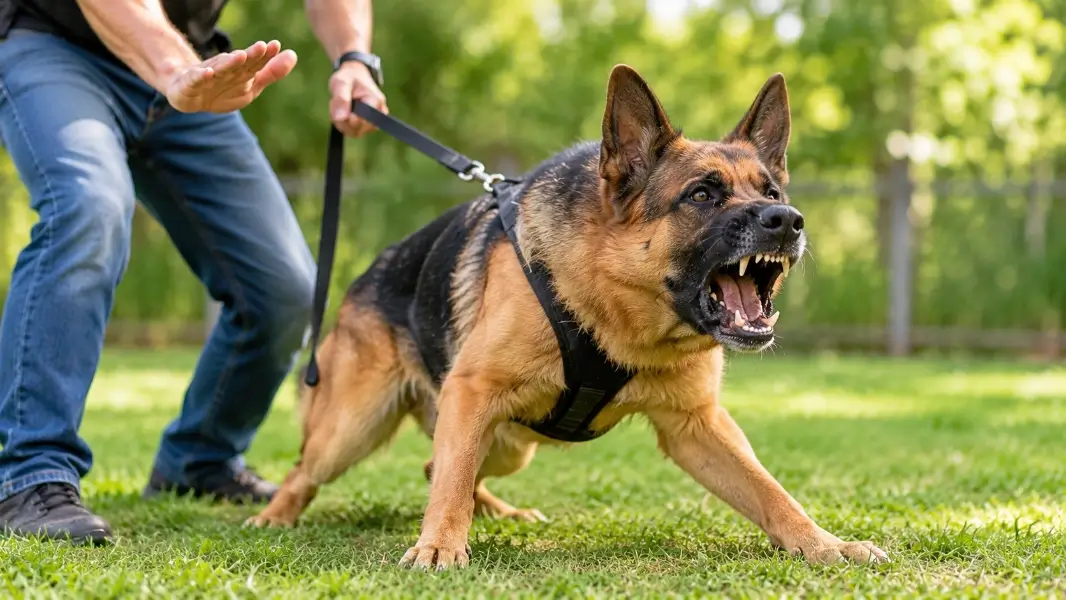
Your dog just lunged at the mail carrier so hard the leash nearly came out of your hands. Or maybe he snapped at your kid over a chew bone. Or he goes completely over the edge every time another dog walks by – pulling, barking, teeth showing – and you dread every single walk.
You are not alone in this. Around 4.5 million people are bitten by dogs every year in the United States, according to the American Veterinary Medical Association. Most of those owners wanted to fix the problem. They just didn’t know where to start – or they started in the wrong place.
This guide covers everything. What kind of aggression your dog has. The training methods that actually work. How to keep your family safe while you work through it. What to look for in a trainer. Whether medication could help. And the honest timelines you need to hear. We’ve combed through real owner experiences, current behavior science, and the gaps every other guide leaves wide open – so you don’t have to piece it together on your own.
Is It Aggression or Reactivity? You Need to Know the Difference
These two words get used as if they mean the same thing. They don’t – and mixing them up will steer your training in the wrong direction from day one.
A reactive dog overreacts to normal things. Another dog, a stranger, a skateboard, a kid running. The reaction is big – barking, lunging, spinning, whining. But the dog is not trying to hurt anyone. The reaction usually comes from fear, frustration, or being overly excited. If the trigger goes away, the dog calms down.
An aggressive dog is trying to create distance or cause harm. The goal is to make something go away – permanently, by force if needed. Aggression is usually driven by fear too, but the intensity is higher. Some dogs show very little warning before they bite.
Here’s the problem: a reactive dog can become an aggressive dog if the reactivity is ignored long enough. Every time your dog lunges and the other dog walks away, your dog learns that lunging works. The behavior gets stronger. What starts as frustration can build into something much harder to change.
Quick test: When the trigger leaves, does your dog calm down in under a minute? That’s usually reactivity. If your dog stays wound up, keeps scanning, and won’t settle – that’s closer to aggression. Either way, the training approach is similar. But knowing the difference helps you understand your dog’s starting point.
Stop – Do This Before You Start Any Training
This is the step that almost every guide skips. And it’s the most important one.
Get Your Dog to the Vet First
Pain makes dogs bite. It’s that simple.
A dog with an ear infection, arthritis, a bad tooth, or a thyroid problem may lash out in ways that look like a behavior problem – but are actually a medical problem. The American Veterinary Society of Animal Behavior (AVSAB) recommends a full physical exam before beginning any behavior modification program for aggression.
When you call your vet, tell them specifically that your dog has been showing aggressive behavior. Ask them to check for:
- Pain anywhere in the body, including joints, ears, and teeth
- Hypothyroidism (a thyroid condition linked to behavior changes in dogs)
- Neurological issues
- Vision or hearing loss (a dog who can’t hear or see well may startle and snap)
- Any hormonal imbalance
If a medical cause is found and treated, the aggression may improve significantly on its own. At the very minimum, you’ll know the behavior is not caused by physical pain – and you can move forward with training confidently. If your dog has also been panting more than usual, that can be a sign of pain or stress too. Learn what excessive panting in dogs can signal here.
Understand Your Dog’s Bite Level With the Dunbar Bite Scale
Not all bites are equal. Dr. Ian Dunbar, a world-renowned veterinarian and dog trainer, created a six-level scale to help owners and professionals assess bite severity. Knowing your dog’s level helps you understand how serious the situation is – and what kind of help you need.
- Level 1: Air snap. No skin contact. This is a warning – your dog is communicating that he’s uncomfortable. This is the best-case scenario and very trainable.
- Level 2: Teeth make contact with skin but do not break the skin. Usually leaves a bruise or red mark. Still very manageable with the right training.
- Level 3: One to four punctures from a single bite, all shallower than half the length of the dog’s fang. This is a serious bite and needs professional help – but most dogs at this level can improve significantly.
- Level 4: One to four punctures from a single bite with at least one puncture deeper than half the fang length. The dog held on and shook. This is dangerous. A veterinary behaviorist (a vet who specializes in animal behavior) is strongly recommended at this level.
- Level 5: Multiple bite incidents with Level 4 or higher bites. The dog has a bite history. Prognosis is guarded. Management, medication, and professional guidance are all needed.
- Level 6: The bite caused the death of a person or animal. This level requires immediate professional evaluation and legal consultation.
Most dogs who bite are at Level 1 or 2. Those dogs can make tremendous progress with the right approach. Levels 3 and above need professional involvement from the start – not because the dog is hopeless, but because the stakes are too high to guess at.
7 Types of Dog Aggression – Why the Type Changes Everything
Your training plan depends on what is driving the aggression. A dog who bites out of fear needs a different approach than a dog who guards his food bowl. Here’s what each type looks like and what usually causes it.
Fear Aggression
This is the most common type. The dog is scared and uses aggression to make the scary thing go away. It often looks like this: dog backs away, then strikes forward when escape is cut off. You may see whale eye (whites of the eyes showing), a tucked tail, ears flat, and lip curling before the snap or lunge. The fight-or-flight response kicks in, and when flight isn’t possible, fight takes over.
Resource Guarding Aggression
The dog growls, snaps, or bites when someone approaches his food, toys, bones, bed, or even a favorite person. Resource guarding is a normal dog behavior that becomes a problem when it reaches dangerous levels. Food bowls and high-value chews are the most common triggers. This type responds very well to specific training protocols developed by certified behavior consultants like Jean Donaldson.
Leash Reactivity and Frustration Aggression
Your dog is totally fine off leash with other dogs but completely loses it when he’s on leash. This is called barrier frustration or leash reactivity. The leash prevents your dog from doing what he naturally wants to do – approach, sniff, play. That frustration turns into the barking, lunging behavior you dread on walks. Many owners describe this as their dog being “a different dog on leash.”
Dog-to-Dog Aggression
Some dogs are simply not friendly with other dogs – on or off leash. This can stem from a lack of early socialization, a bad experience with another dog, or genetics (some breeds were developed to be less dog-tolerant). This type requires careful management and training, and in some cases, the goal is not “making friends with every dog” but teaching your dog to tolerate other dogs from a distance without reacting.
Territorial Aggression
The dog guards his home, yard, or car. He’s fine in public but goes into full guard-mode when anyone approaches his territory. Postal workers, delivery drivers, and guests at the door are common targets. The challenge with territorial aggression is that your dog gets rewarded every single time – the mail carrier walks away. As far as your dog is concerned, the barking and charging worked.
Pain-Induced Aggression
A dog in pain may bite without warning. This is why the vet visit comes first. An older dog who suddenly becomes snappy may be dealing with arthritis, a bad tooth, or another painful condition. Children are especially at risk because they may hug, squeeze, or move a dog’s painful spots without knowing it. Never assume aggression in an older dog is a training problem until pain has been ruled out.
Learned Aggression
Some dogs have learned that aggression gets them what they want. If your dog growled once at the vet and the vet backed off, your dog learned something. If he snapped at your nephew and your nephew left him alone, he learned that too. This type often develops on top of another type – fear aggression that the owner accidentally reinforced by retreating every time the dog growled.
The Method That Actually Works: Desensitization and Counter-Conditioning
If you read one section in this article, make it this one. Desensitization and counter-conditioning (DS/CC) is the method recommended by the American Veterinary Society of Animal Behavior, the Animal Behavior Society, and virtually every certified behavior consultant. It is not a quick fix. But it is the fix that actually lasts.
What Is Desensitization?
Desensitization means slowly exposing your dog to whatever triggers his aggression – at a low enough level that he stays calm. You start so far away from the trigger, or at such a low intensity, that your dog barely notices it. Then, very gradually over many sessions, you bring the trigger closer or make it stronger. The key word is slowly. Rushing this step is the most common mistake owners make.
What Is Counter-Conditioning?
Counter-conditioning means changing how your dog feels about the trigger – from “that thing is scary/bad” to “that thing means great things are coming.” You do this by pairing the trigger with something your dog loves every single time the trigger appears. High-value food works best – real chicken, cheese, hot dog pieces. The trigger appears, the treat appears. Trigger gone, treat gone. Over time, your dog’s brain makes a new association: stranger approaching = chicken. The feeling changes. The behavior changes.
The Threshold Concept – Your Most Important Training Tool
The threshold is the line between “my dog notices the trigger but stays calm” and “my dog completely loses it.” Training only works below threshold. Once your dog is over threshold – lunging, barking, shutting down – he cannot learn. His cortisol levels spike, his brain switches to survival mode, and food means nothing to him.
Your entire job in the beginning is to stay below threshold. This usually means training at a greater distance from the trigger than feels necessary. If your dog reacts to other dogs at 30 feet, start at 60 feet. If he reacts to strangers at 15 feet, start at 50 feet. This feels too easy. That’s the point. Under-threshold training is the only training that actually changes behavior at the brain level.
Watch for early stress signals that tell you your dog is getting close to his threshold: yawning, lip licking, turning away, shaking off, sudden sniffing of the ground, stiffening. These are calming signals – your dog’s way of trying to handle his discomfort before it boils over. When you see them, increase your distance. You haven’t failed. You’ve just gotten information you needed.
How to Run a DS/CC Training Session, Step by Step
- Load up on high-value treats. Real food works best – boiled chicken, cheese, tiny hot dog pieces. Leave the kibble at home for this.
- Find your dog’s threshold distance. Start far enough away from the trigger that your dog notices it but stays calm. No barking, no lunging, just awareness.
- The moment the trigger appears, start feeding treats. One treat per second as long as the trigger is visible. Fast and continuous.
- The moment the trigger disappears, stop the treats. This pairing is what teaches the new association.
- Keep sessions short. Five to ten minutes maximum. Aggression training is mentally exhausting for your dog. Short sessions done consistently every day beat long sessions done once a week.
- End before your dog hits his limit. If you feel the tension building, end the session. Walk away. Scatter treats on the ground for a “find it” game to help your dog decompress.
- Track your progress. Write down what distance you trained at and how your dog did. Gradually reduce the distance by just a few feet per week when your dog is consistent and calm.
One critical warning: trigger stacking is real. If your dog was nervous at the vet this morning, saw another dog through the fence at lunch, and then heard a loud noise before your training session, his threshold is already lower than normal. He’ll react faster and more intensely. On high-stress days, skip the session or train at twice your usual distance.
Keeping Everyone Safe During Training
Training takes time. While you’re working through it, your household needs to be managed so that nothing gets worse – and nobody gets hurt.
Muzzle Training – The Humane, Positive Way
A lot of owners resist the idea of a muzzle. It feels like giving up, or like telling the world your dog is dangerous. It is neither of those things.
A properly fitted basket muzzle – like the Baskerville Ultra or a wire cage muzzle – allows your dog to pant, drink water, and take treats. It does not cause pain or distress when introduced correctly. It allows your dog to participate in training and life without the ability to cause serious injury. That is a gift to both your dog and to everyone around him.
Here is how to introduce it without force:
- Show your dog the muzzle. Let him sniff it. Drop treats near it. Keep this up for several sessions – no pressure.
- Hold the muzzle open and smear peanut butter or squeeze cheese on the inside front. Let your dog push his nose in to lick it. Remove the muzzle while he’s still eating. Do this many times.
- Once your dog is pushing his nose in eagerly, start fastening the strap behind his head for one or two seconds, then immediately remove it and reward him.
- Gradually extend the duration. A dog who is muzzle trained through positive reinforcement will often push his nose into the muzzle on their own because they associate it with treats and good things happening.
Never force the muzzle onto a struggling dog. That teaches the dog that the muzzle is exactly as bad as they feared. Take it slow and let your dog choose to participate at every step.
Home Management That Prevents Incidents
Management means changing your environment so the bad thing doesn’t happen – not because your dog has learned not to do it, but because the setup doesn’t allow it. Management is not training. It is a safety net while training happens.
- Baby gates and exercise pens – Keep your dog separated from visitors or kids in certain parts of the house.
- Crate training – A crate is not a punishment. When properly introduced, most dogs treat their crate as a safe den. It gives your dog a place to decompress away from triggers.
- Front-clip harness or head halter – For walks, a front-clip harness like the Freedom No-Pull or a head halter like the Gentle Leader gives you better control and reduces the ability to pull at full force. These are not fixes, but they make walks safer while you train.
- Visual barriers – For dogs who react through the fence or window, block their view. Film on the lower windows, solid privacy fencing, or not leaving the dog in the backyard unsupervised.
- “Dog In Training” vest – Signals to strangers that you need space. Many people will give you room if they see the vest, which prevents the ambush approaches that can blow up a training session.
Keeping Children Safe Around an Aggressive Dog
Children under age ten are bitten more often than any other group. They move unpredictably, they put their faces near dogs, and they don’t read warning signals. If you have children and a dog who bites, the safety rules are non-negotiable:
- Never leave a child and an aggressive dog together unsupervised. Not even for a minute.
- Teach children to ask permission before approaching any dog – including your own.
- Teach children to recognize when a dog wants to be left alone: turning away, moving away, hiding, lip licking, yawning, stiffening.
- Give the dog a space of his own – a crate or room – where children are not allowed to go. The dog needs to know he has an exit.
- Do not let children approach the dog during meals, while sleeping, or while chewing a bone.
What to Do If Your Dog Bites Someone
Stay calm. Here’s what to do immediately after a bite incident in the United States:
- Secure your dog so he cannot bite again. Put him in a room, crate, or car.
- Help the bite victim. Wash the wound thoroughly with soap and water for at least five minutes. Even what looks like a small puncture needs medical attention – dog bites carry infection risk. Encourage the person to see a doctor.
- Exchange contact information. Get the victim’s name, phone number, and email.
- Document the incident. Write down exactly what happened – what the trigger was, what your dog did, what the victim was doing. Take photos of the wound with the victim’s permission.
- Check your state’s dog bite laws. Many US states have strict liability laws – meaning you can be held financially responsible for a bite even if your dog had no prior history. Homeowners’ and renters’ insurance often covers dog bite liability, but some policies exclude certain breeds.
- Contact your vet and report what happened. They can document the bite history and help you decide next steps.
- Get professional help immediately. A bite that breaks skin is a serious signal. Do not wait.
Dog Aggression Training by Type – What to Do for Each
Food Aggressive Dog Training – Resource Guarding Protocol
Resource guarding is one of the most common and most mishandled forms of dog aggression. The instinct to reach in and take the food away when your dog growls is the exact wrong move. It confirms your dog’s suspicion that people near his food bowl are a threat, and it increases the guarding behavior over time.
The correct approach is based on the work of certified dog trainer Jean Donaldson, author of “Mine!” – the gold standard guide on resource guarding:
- Start by feeding near the bowl, not from it. While your dog eats his regular food, walk past and toss a piece of chicken into his bowl from a few feet away. You are not reaching in – you are approaching and making good things happen.
- Gradually move closer over many sessions as your dog stays relaxed when you approach.
- Teach a solid “trade” or “drop it” command using items your dog is NOT guarding. Practice trading a low-value item for a high-value treat until it’s automatic. Then practice with increasingly valued items.
- Never practice “taking away to give back.” The old advice of randomly removing your dog’s food bowl to “teach him you’re the boss” actually makes resource guarding worse, not better. The bowl going away should always predict something better coming.
If your dog has already snapped or bitten over food, do not work on this alone. Work with a certified behavior consultant who can assess the severity and guide the protocol safely.
Fear Aggressive Dog Training
The most important rule with fear aggression: never force your dog to face his fear. Never push him toward the trigger to “let him see it’s not scary.” Never correct him for growling – a growl is a warning, and punishing it teaches your dog to bite without warning first.
DS/CC is your primary tool (see the section above). Two additional techniques work well with fear aggressive dogs:
- The “Look at That” (LAT) game – developed by dog trainer Leslie McDevitt in her book “Control Unleashed.” You ask your dog to look at the trigger, mark that moment with a word or clicker, then reward. Over time, the dog learns to look at the trigger calmly and then look back at you for the treat. The trigger becomes a cue to check in with you rather than a cue to panic.
- Behavior Adjustment Training (BAT) – developed by Grisha Stewart. The dog is allowed to investigate the trigger at his own pace and is rewarded with the opportunity to move away. It works with the dog’s natural instinct rather than against it.
Fear Free certified trainers and those who follow the LIMA principle (Least Intrusive, Minimally Aversive) are your best partners for fear-based aggression. LIMA means the trainer will always try the gentlest possible approach before escalating to anything more intense.
Leash Reactive Dog Training
Leash reactivity training is about distance and threshold management. Here is a practical plan for walks:
- Change your walk route to avoid common trigger spots while you’re in the early stages of training. You cannot train a dog who is already reacting. Prevention is not failure – it’s strategy.
- Use an u-turn the moment you see a trigger before your dog notices it. Pivot, say “let’s go,” walk in the other direction, treat your dog when he follows. This is about creating a conditioned response to the cue to move away.
- Establish a threshold distance and train from there. Find a spot where your dog can see the other dog (or person) but stays calm. Feed continuously while the trigger is in sight. When the trigger passes, treats stop.
- Time walks carefully. Early morning and late evening walks often have fewer triggers. Busy weekend afternoons near busy parks are the hardest possible training environment. Work your way up to those situations.
Dog-to-Dog Aggression Training
Dog-to-dog aggression has the worst prognosis of the common aggression types when it involves serious bites. But reactivity toward other dogs – which looks similar and is far more common – responds very well to training.
The goal is usually not “my dog will love other dogs.” A realistic goal is “my dog can walk past another dog without losing his mind.” Management and DS/CC are the core tools. Specialized reactive dog group classes, offered by trainers like those certified by the Certification Council for Professional Dog Trainers (CCPDT), can be tremendously helpful because they give you controlled exposures with other reactive dogs – in an environment designed for it.
How to Find the Right Trainer for Aggressive Dog Behavior
This is where most owners go wrong. The dog training industry in the United States is completely unregulated. Anyone can call themselves a dog trainer. No license is required. No certification is required. This matters enormously when your dog has a bite history.
Credentials That Actually Mean Something
- CPDT-KA (Certified Professional Dog Trainer – Knowledge Assessed) – From the Certification Council for Professional Dog Trainers. Requires passing an exam based on current behavioral science. A good baseline credential.
- CBCC-KA (Certified Behavior Consultant Canine – Knowledge Assessed) – Also from CCPDT. Specifically focused on behavior problems including aggression. A stronger credential for your situation.
- CAAB (Certified Applied Animal Behaviorist) – From the Animal Behavior Society. Requires a master’s or PhD in animal behavior or a related field plus supervised experience. These are highly qualified specialists.
- Dip ACVB (Diplomate of the American College of Veterinary Behaviorists) – A veterinary behaviorist who has completed residency training in animal behavior. The highest credential available. For severe aggression cases – Level 4 and above on the Dunbar scale – this is who you want. They can also prescribe medication.
- CDBC (Certified Dog Behavior Consultant) – From the International Association of Animal Behavior Consultants. Good credential for behavior consultants.
Red Flags That Should Make You Walk Away
- They use the word “dominance” to explain your dog’s behavior and talk about being the “alpha.” Dominance theory as applied to pet dogs has been thoroughly rejected by modern behavioral science.
- They recommend choke chains, prong collars, or shock collars (also called e-collars) as a first step for aggression. These tools can suppress behavior temporarily while increasing fear and anxiety – making aggression worse in the long run.
- They want to alpha roll your dog, pin him, or use “flooding” (forcing the dog to stay near what scares him until he stops reacting). These are aversive techniques that can cause bites and worsen fear aggression.
- They have no certifications and cannot explain the science behind what they’re recommending.
- They guarantee to fix your dog in a certain number of sessions. No honest trainer makes that promise with aggression cases.
The American Veterinary Society of Animal Behavior has a position statement against the use of punishment-based training methods for aggression. If your trainer’s approach conflicts with AVSAB guidance, that’s a serious warning sign.
What Does Aggressive Dog Training Cost?
Costs vary widely by location, credential level, and format. Here’s a general range for the United States in 2026:
- Private in-home trainer (CPDT-KA or CBCC-KA): $100 – $300 per session
- Reactive dog group class: $200 – $500 for a 6-8 week course
- Board and train program: $1,500 – $6,000+ for 2-6 weeks. These vary enormously in quality. Research the trainer’s methods very carefully before sending your dog anywhere.
- Certified Applied Animal Behaviorist (CAAB): $200 – $500+ per hour for initial consultation
- Veterinary Behaviorist (Dip ACVB): $300 – $600+ for the initial consultation, which typically includes a detailed behavioral history and treatment plan
Ask if your pet insurance covers behavior consultations. Some policies do, particularly those that include behavioral coverage as an add-on. It’s worth checking your policy before you pay out of pocket for every session.
Can Medication Help Your Aggressive Dog?
The short answer: yes, for many dogs. Medication does not fix aggression on its own. But for dogs whose aggression is driven by severe anxiety or fear, medication can lower the baseline anxiety level enough that training becomes possible. Think of it as lowering the floor so your dog can actually learn.
Your regular veterinarian can prescribe some behavioral medications. A veterinary behaviorist can prescribe a wider range and tailor the approach more precisely to your dog’s specific situation.
Medications that are sometimes used for dogs with aggression related to fear and anxiety include:
- Fluoxetine (Prozac) – An SSRI commonly used for fear-based aggression and anxiety. Daily medication, takes 4-6 weeks to reach full effect.
- Trazodone – Used situationally, before vet visits, travel, or high-stress situations. Some owners use it before training sessions to help their dog stay below threshold.
- Clonidine – Another situational medication used for anxiety. Works best in combination with daily medications in some dogs.
- Gabapentin – Sometimes used for anxiety, particularly in dogs who also have pain. Also has mild sedative effects.
Never give your dog medication without veterinary guidance. Dosing, interactions, and the right choice of medication all depend on your dog’s full health picture. Medication without behavior modification usually produces limited results – and behavior modification without medication in a truly anxious dog can produce the same. Combined, they offer the best outcomes, according to guidance from the American College of Veterinary Behaviorists.
How Long Does Aggressive Dog Training Take? Realistic Timelines
This is the question every owner asks. The honest answer is: it depends on the type of aggression, the severity, your dog’s history, how consistent you are, and whether medical factors are involved.
Here are general timelines based on typical cases:
- Mild leash reactivity or resource guarding (Level 1-2 bites, infrequent): 4 to 12 weeks of consistent daily training can produce visible improvements. Full behavior change may take 3 to 6 months.
- Moderate fear aggression or dog-to-dog reactivity (Level 2-3 bites, recurring): 3 to 6 months before significant progress is typical. Ongoing management may always be part of life.
- Severe aggression with bite history (Level 4+): 6 to 18 months or longer. Some dogs reach a “managed” state where they are safe with proper protocols in place, rather than a fully resolved state.
Signs your training is working: Your dog recovers faster after a reaction. The trigger has to be closer before he reacts. His body language is calmer – ears more relaxed, tail lower but not tucked, able to take treats near the trigger. He checks in with you near triggers instead of fixating.
Signs it’s not working or you need to adjust: No improvement after 6-8 weeks of consistent training. The reactions are getting worse, not better. Your dog cannot take treats near the trigger at any distance. These are signals to get professional help or reassess your training approach.
What Your Dog Needs From You – The Emotional Side of Training
Your dog reads you. When you tighten the leash before you even see the trigger, your dog feels that tension. When you hold your breath, he notices. When you are anxious and scanning the horizon, his stress levels rise to match yours. The leash is a two-way communication cable.
This is not your fault. It is an incredibly natural response after your dog has lunged or bitten. But it is something you need to actively work on – for his sake and yours.
A few things that actually help:
- Breathe slowly and deliberately when you spot a trigger coming. Take a slow breath out. Your body signals safety to your dog.
- Loosen your grip on the leash slightly. A tight leash cranks up your dog’s arousal level. A looser leash (while still being in control) keeps him calmer.
- Use a happy, calm voice near triggers – not a tense, warning voice. “Oh look, a doggy! Yes! Good boy!” while tossing treats keeps the moment feeling manageable to your dog.
- Celebrate the small wins. Your dog walked past the neighbor’s yard without reacting? That was a win. Tell him so. Notice the progress, not just the setbacks.
Many owners find that working with a trainer for a few sessions helps them understand their own body language habits and what changes to make. The trainer is often coaching the human as much as the dog.
When Training Isn’t Enough – The Hardest Conversation
This is the section no guide wants to write. But it matters, so here it is.
Some dogs – particularly those with severe genetic predispositions, long histories of learned aggression, or who have caused serious injury – may not reach a safe level of behavior even with the best training and medication. In those situations, there are several paths:
- Management-only plans: Some dogs live full, good lives with strict management. They wear a muzzle in public. They are separated from guests. They don’t go to dog parks. This is not failure – it is responsible ownership. Many dogs do beautifully within a carefully structured environment.
- Rehoming to the right situation: A dog who is aggressive only toward small children may thrive in an adult-only household. A dog who is dog-aggressive may be wonderful as an only dog with no dog contact. Sometimes rehoming – done carefully and honestly – is the most humane option for everyone, including the dog.
- Behavioral euthanasia: This is the most painful decision any owner can face. When a dog’s quality of life is severely impacted by anxiety and fear, when the risk to the household or public is too high to manage, and when treatment options have been exhausted, behavioral euthanasia may be the most humane choice available. A veterinary behaviorist can help you assess whether you’re at this point. You are not a bad owner for considering it. You are a responsible one.
If you’re facing this decision, please consult with a Diplomate of the American College of Veterinary Behaviorists before concluding all options are exhausted. These specialists sometimes see cases that general vets and trainers couldn’t resolve – and they can give you an honest, evidence-based assessment of what’s possible.
Frequently Asked Questions About Aggressive Dog Training
Can an aggressive dog be trained?
Yes – most aggressive dogs can be trained to a significantly safer level of behavior. The exception is dogs with severe genetic predispositions or long bite histories. The key factors are: catching it early, using the right methods (DS/CC, not punishment), being consistent, and getting professional help for anything beyond mild reactivity. Many dogs who lunged and snapped every day go on to become manageable, happy pets with proper training and support.
What is the best method for dog aggression training?
Desensitization combined with counter-conditioning (DS/CC) is the method recommended by the American Veterinary Society of Animal Behavior and supported by the most current behavioral science. It changes how the dog feels about triggers at a deep level, rather than just suppressing the visible behavior. Positive reinforcement-based training following the LIMA principle (Least Intrusive, Minimally Aversive) is the standard of care in the field.
How do I train an aggressive dog towards strangers?
Start by identifying what specifically triggers the reaction – strangers approaching, strangers making eye contact, strangers reaching out to pet? Then use DS/CC to build a positive association. Keep your dog well below threshold, feed high-value treats whenever a stranger appears at a safe distance, and gradually – over weeks and months – close the gap. Never let strangers approach and “say hi” with an aggressive dog. That approach floods the dog and sets back training significantly.
Should I punish my dog for growling?
No. Never punish growling. A growl is your dog saying “I’m uncomfortable and I need space.” It is a warning – and it’s a warning you want to keep. If you punish the growl, your dog learns to stop growling before he bites. The bite still comes – but now there’s no warning. This is why punishment-based approaches to growling are so dangerous and why behavioral scientists and veterinary behaviorists are strongly against them.
How much does aggressive dog training cost near me?
Private training sessions with a qualified behavior consultant typically range from $100 to $300 per session in the US. Veterinary behaviorist consultations range from $300 to $600 for an initial appointment. Reactive dog group classes typically cost $200 to $500 for a 6-8 week program. Costs vary significantly by city and region. Many areas have low-cost behavior resources through humane societies and veterinary school behavior clinics.
What is fear aggressive dog training?
Fear aggressive dog training is the process of helping a dog who bites or threatens because of fear. The training works by reducing the dog’s fear response through desensitization and counter-conditioning. The goal is to change the emotional association with the trigger – from “that thing is terrifying” to “that thing predicts good things.” Fear Free certified trainers who follow positive reinforcement methods are best suited for this type of aggression.
What do I do if my dog shows food aggression?
Do not reach into your dog’s bowl or take food away to “show him who’s boss.” This approach consistently makes resource guarding worse. Instead, begin counter-conditioning by approaching the bowl during meals and dropping something better into it – real chicken, cheese – so your dog learns that your approach near his food predicts great things, not a threat. Work with a certified behavior consultant if any growling or snapping has occurred.
How long does it take to train an aggressive dog?
Mild reactivity can show significant improvement in 4 to 12 weeks of daily training. Moderate aggression typically takes 3 to 6 months before meaningful progress is consistent. Severe aggression with a bite history may require 6 to 18 months of work, with ongoing management always remaining part of the picture. Consistency is the biggest variable – daily short sessions produce far better results than sporadic long ones.
Is Cesar Millan’s method good for aggressive dogs?
Cesar Millan’s methods rely heavily on dominance theory and physical correction techniques that are not supported by current behavioral science. The American Veterinary Society of Animal Behavior, the American Veterinary Medical Association, and most credentialed behavior professionals advise against punishment-based methods for aggression specifically. These methods can suppress warning signals like growling, suppress symptoms without changing the underlying emotion, and in some cases increase the risk of biting.
Can an aggressive dog ever be fully cured?
The word “cured” is not accurate for aggression. What is realistic is “significantly improved” and “safely managed.” Most dogs with mild to moderate aggression reach a point where they can live comfortably within normal household life with thoughtful management. Dogs with severe aggression histories may always require muzzles in certain situations, careful management, or controlled environments. This does not mean they can’t have happy, full lives – it means those lives are built around understanding who they are.
What should I look for in an aggressive dog trainer?
Look for CPDT-KA, CBCC-KA, CAAB, CDBC, or Dip ACVB credentials. The trainer should use force-free or positive reinforcement-based methods. They should be able to explain the science behind their approach. They should not promise a quick fix or guarantee results. They should conduct a thorough behavioral history before recommending any intervention. If they mention dominance, alpha status, or recommend punishment tools as a first step, that is a red flag.
Is it safe to have an aggressive dog around other pets?
It depends on the type and severity of the aggression and the specific animals involved. A dog who is dog-aggressive may live peacefully with cats or other species. A dog who resource-guards may be fine with other pets as long as separate feeding areas are maintained. Never leave an aggressive dog unsupervised with other pets until you have worked with a professional and have a thorough understanding of the dog’s specific triggers and thresholds.
What is a veterinary behaviorist and do I need one?
A veterinary behaviorist is a licensed veterinarian who has completed an additional residency program in animal behavior and passed board examinations through the American College of Veterinary Behaviorists. They hold the credential Dip ACVB. They can both prescribe behavioral medications and design comprehensive behavior modification programs. For dogs with Level 3 or higher bites, repeated bite incidents, aggression that hasn’t responded to other approaches, or aggression that may be medically related, a veterinary behaviorist consultation is strongly worth pursuing. The American College of Veterinary Behaviorists maintains a “Find a Diplomate” directory at dacvb.org.
My dog is aggressive on the leash but fine off leash – what does that mean?
This is a classic pattern of leash reactivity driven by barrier frustration. The leash prevents your dog from approaching and doing what he naturally wants to do – sniff, check out, move away freely. That frustration explodes as the barking, lunging behavior you see. It is very common and responds well to training with the approach-and-retreat method (u-turns), DS/CC at threshold distance, and consistent positive reinforcement during controlled exposures. The goal is to teach your dog that calm behavior near triggers on leash also works – because treats happen when he’s calm, not when he’s reacting.






One Comment
Comments are closed.